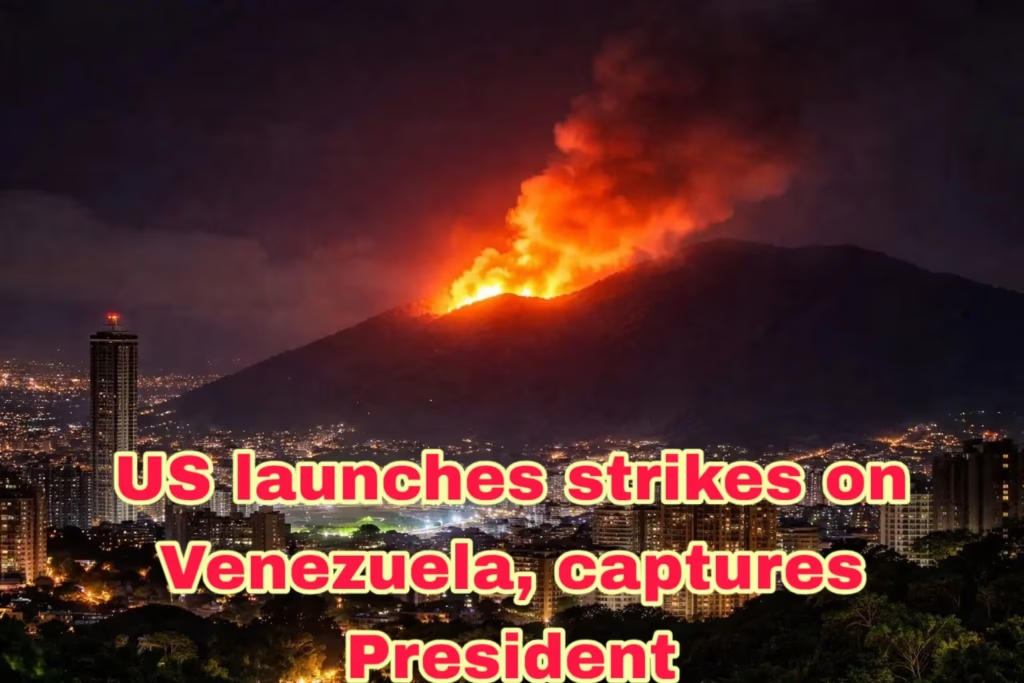
In a dramatic escalation, the US launches strikes on Venezuela, captures President Maduro and his wife, and charges him with drug offences including narco-terrorism. Explore the details, background, and global reactions to this historic event on January 3, 2026.
In an unprecedented move that has shaken the international community, the US launches strikes on Venezuela, resulting in the capture of President Nicolás Maduro and his wife, Cilia Flores. President Donald Trump announced early on January 3, 2026, that American forces successfully executed a large-scale military operation, leading to Maduro’s removal from the country. The Venezuelan leader now faces long-standing charges with drug offences in the United States, primarily related to narco-terrorism and cocaine trafficking.
This operation marks a significant escalation in U.S.-Venezuela relations, drawing parallels to historical interventions like the 1989 capture of Panama’s Manuel Noriega. As the world reacts to the news that the US launches strikes on Venezuela and captures its president, questions arise about the implications for regional stability, international law, and the ongoing war on drugs.
Why Did the US Launch Strikes on Venezuela?
US launch The decision for the US to launch strikes on Venezuela stems from years of accusations against Maduro’s regime. Since 2020, U.S. prosecutors have indicted Maduro on charges with drug offences, alleging he led the “Cartel de los Soles,” a network within Venezuela’s military involved in massive cocaine trafficking to the United States.
- Why Did the US Launch Strikes on Venezuela?
- The Operation: How the US Captured President Maduro
- Charges with Drug Offences: What Maduro Faces in the US
- Immediate Aftermath in Venezuela
- Global Reactions to US Strikes on Venezuela and Maduro’s Capture
- Legal and Political Implications
- What Happens Next for Venezuela and US-Venezuela Relations?
The 2020 Indictment and Narco-Terrorism Allegations
In March 2020, the U.S. Department of Justice charged Maduro and over a dozen Venezuelan officials with narco-terrorism, drug trafficking, and related crimes. Prosecutors claim the cartel used state resources to flood the U.S. with cocaine, partnering with groups like Colombia’s FARC rebels. A bounty was placed on Maduro’s head, eventually rising to $50 million.
Maduro has consistently denied these allegations, calling them political fabrications aimed at Venezuela’s vast oil reserves. However, the Trump administration intensified pressure in 2025, designating the Cartel de los Soles and Tren de Aragua as foreign terrorist organizations.
Escalating Tensions in 2025
Leading up to the moment the US launches strikes on Venezuela, tensions built rapidly:
- Military Buildup: Starting in August 2025, the U.S. deployed warships, including the USS Gerald R. Ford, to the Caribbean.
- Strikes on Drug Vessels: Over 35 boats suspected of trafficking drugs were destroyed, resulting in more than 115 deaths.
- Oil Tanker Seizures: The U.S. imposed a naval quarantine, seizing tankers and blocking Venezuelan oil exports.
- Covert Operations: Late December 2025 saw CIA-led actions, including a strike on a drug-loading dock.
These actions were framed as part of “Operation Southern Spear,” a counter-narcotics campaign. Trump repeatedly warned of land-based strikes if drug trafficking continued.
The Operation: How the US Captured President Maduro
On January 3, 2026, the US launches strikes on Venezuela in a swift nighttime raid. Explosions rocked Caracas and surrounding areas, targeting military sites like Fuerte Tiuna, La Carlota airbase, and La Guaira port.
Details of the Raid
- Elite Forces Involved: Reports indicate U.S. Army Delta Force led the ground operation, capturing Maduro and his wife at their residence in Fuerte Tiuna.
- Airstrikes and Duration: The strikes lasted under 30 minutes, with low-flying aircraft and precision hits on communications and defense infrastructure.
- Capture and Extraction: Maduro and Flores were helicoptered to the USS Iwo Jima, en route to New York for trial.
- Casualties: U.S. forces reported minor injuries but no deaths. Venezuelan officials claimed civilian and military losses.
Trump described watching the operation in real-time, calling it flawless despite a four-day weather delay.
Charges with Drug Offences: What Maduro Faces in the US
Upon arrival in New York, Maduro will face federal charges with drug offences in the Southern District of New York. Key accusations include:
- Narco-Terrorism Conspiracy: Leading a criminal enterprise using terrorism to facilitate drug trade.
- Cocaine Importation: Allegedly overseeing the shipment of tons of cocaine to the U.S.
- Weapons Possession Conspiracy: Arming cartel operations.
Attorney General Pam Bondi stated Maduro will “face the full wrath of American justice.” His wife, Cilia Flores, faces similar indictments.
This echoes the Noriega case, where the Panamanian leader was tried and convicted on drug charges after U.S. intervention.
Immediate Aftermath in Venezuela
Venezuela plunged into uncertainty following the US launches strikes on Venezuela and Maduro’s capture.
Government Response
- Vice President Delcy Rodríguez demanded “proof of life” and condemned the action as aggression.
- A state of emergency was declared, with calls for civilian mobilization.
- Power outages and chaos hit Caracas, though opposition figures suggested a possible “negotiated exit.”
Public Reaction
Mixed responses emerged: Pro-Maduro supporters protested in Caracas, while Venezuelan expatriates in places like Miami celebrated.
Global Reactions to US Strikes on Venezuela and Maduro’s Capture
The international community responded swiftly and divisively.
Allies of the US
- Republicans in Congress: Praised the operation, with figures like Marco Rubio and Rick Scott hailing it as a blow to narco-terrorism.
- Argentina: President Javier Milei celebrated “freedom” for Venezuela.
Condemnations
- Russia and Iran: Called it armed aggression and a threat to sovereignty.
- Brazil and Mexico: Condemned violations of international law.
- China: Expressed shock and opposition.
- EU and UK: Urged respect for international norms while monitoring developments.
Many nations called for a UN Security Council meeting.
Legal and Political Implications
Experts debate the legality of the US launching strikes on Venezuela without congressional approval or UN mandate.
Constitutional Questions
Some U.S. lawmakers questioned Article II authority, though Rubio briefed senators it was to execute an arrest warrant.
Precedent and Future
This sets a dangerous precedent for interventions, potentially straining relations in Latin America. Vice President JD Vance emphasized returning “stolen oil” and halting drug flows.
What Happens Next for Venezuela and US-Venezuela Relations?
With Maduro captured and facing charges with drug offences, Venezuela’s future remains unclear. Potential scenarios include:
- Transition to opposition-led government.
- Continued resistance from Chavismo loyalists.
- U.S. involvement in oil industry reconstruction.
Trump plans deeper engagement, signaling a “new dawn” for the region.
The event of the US launching strikes on Venezuela and capturing President Maduro underscores the Trump administration’s aggressive stance on drug trafficking and authoritarian regimes. As Maduro heads to trial, the world watches how this bold action reshapes geopolitics.
Author Profile

- Global Daily Post – Your Trusted Source for Global News & Updates
Globle Daily Post is a leading news platform that covers cricket news, automotive launches, gold silver rates, and international news in real-time.
Latest entries
 IndiaMarch 18, 2026Renault India 2026 Launch Expected Features Price Mileage & Full Details
- WorldMarch 12, 2026Is The Gulf Questioning US Security Guarantee? Rising Doubts Over America’s Role in Middle East Security
- IndiaMarch 7, 2026India vs New Zealand Final Press Conference Live Updates: How SKY Reacted to Santner’s Big Comment Before T20 World Cup Final
- IndiaMarch 7, 2026Future Will Be Much More Multipolar, Says S Jaishankar: India’s Vision for a Changing Global Order