
US Sends Powerful Message With Massive Fighter Jet Deployment
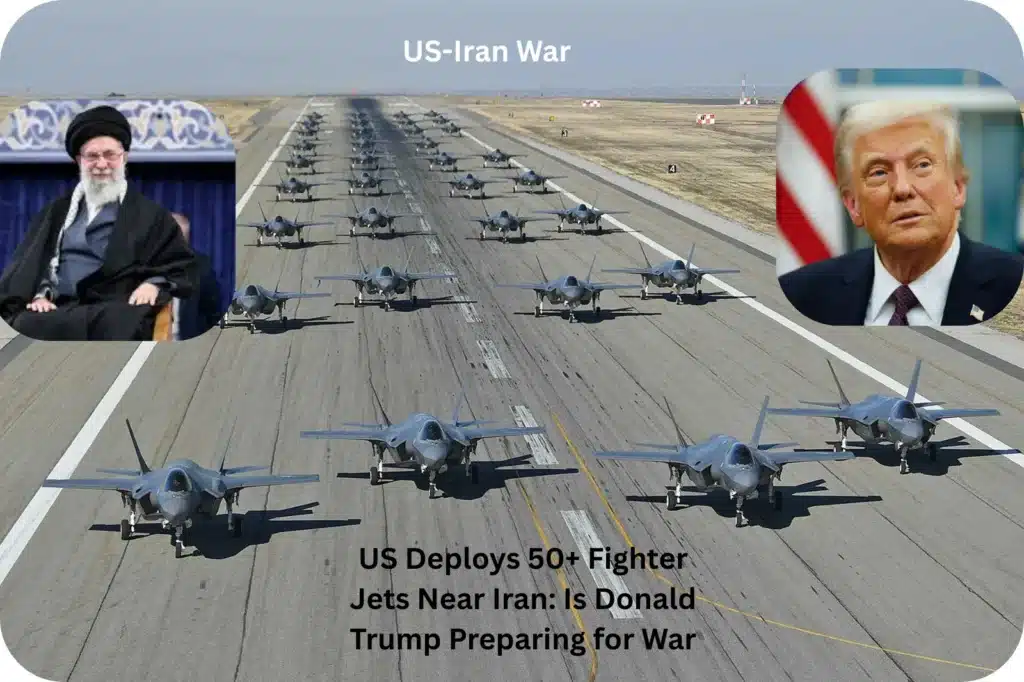
In a move that has sparked global concern, the United States has deployed more than 50 advanced fighter jets to the Middle East within just 24 hours, escalating tensions with Iran and raising fears of a potential military conflict.
The deployment reportedly includes some of the world’s most advanced combat aircraft, capable of stealth operations, air dominance, and precision strikes. Military analysts say such a rapid and large-scale movement of air power is rare and signals a serious strategic warning.
The decision comes under the leadership of Donald Trump, whose administration has taken a tougher stance on Iran amid ongoing nuclear tensions and regional instability.
- US Sends Powerful Message With Massive Fighter Jet Deployment
- Why the US Is Moving Fighter Jets Now
- Rising Tensions Linked to Nuclear Dispute
- Why These Fighter Jets Matter
- Is War Between US and Iran Really Possible
- Global Impact: Why the World Is Watching Closely
- What Happens Next Will Be Critical
- Human Perspective: Fear, Power, and Uncertainty
- Conclusion: Show of Force or Prelude to War
Why the US Is Moving Fighter Jets Now
According to defense officials, the fighter jets were sent to strengthen military readiness and protect American interests and allies in the region.
The deployment serves several key purposes:
- Deterrence against potential Iranian aggression
- Protection of US bases and troops
- Preparation for rapid military response if needed
- Strategic pressure during sensitive diplomatic negotiations
Military experts believe the move is designed more as a show of strength than an immediate preparation for war—but the scale of the deployment has still alarmed observers.
“This is not routine. This is strategic signaling,” said one defense analyst.
Rising Tensions Linked to Nuclear Dispute
At the heart of the crisis lies Iran’s nuclear program.
The United States and Iran have been engaged in indirect negotiations in Geneva to revive or reshape nuclear agreements. However, both sides remain divided on key demands.
Washington wants strict limits on Iran’s nuclear activities, while Tehran seeks relief from economic sanctions.
The military buildup reflects growing uncertainty over whether diplomacy will succeed.
Why These Fighter Jets Matter
The fighter aircraft deployed are among the most powerful in modern warfare.
These jets provide:
- Stealth capabilities that evade radar
- Long-range strike ability
- Air superiority over enemy aircraft
- Rapid deployment in combat zones
Their presence significantly boosts US combat readiness in the Middle East.
Defense experts say such aircraft are typically deployed when military planners want maximum flexibility—from deterrence to potential strike operations.
Is War Between US and Iran Really Possible
Despite the dramatic military buildup, experts caution that war is not inevitable.
Instead, the deployment may be aimed at preventing conflict rather than starting one.
Key reasons include:
1. Strategic Deterrence
The US wants Iran to understand the consequences of escalation.
2. Diplomatic Leverage
Military pressure can strengthen negotiating positions.
3. Regional Stability
The US is protecting allies and shipping routes in the region.
However, risks remain.
Even a small incident—such as an accidental clash or miscalculation—could quickly escalate.
Global Impact: Why the World Is Watching Closely
Any conflict between the US and Iran would have massive global consequences.
These include:
Oil Prices Could Surge
The Middle East produces a large share of the world’s oil. War could disrupt supply.
Global Markets Could Crash
Investors fear instability and uncertainty.
Regional War Risk
Other countries could get involved, expanding the conflict.
Economic Impact
Inflation and fuel prices worldwide could rise.
This is why governments and financial markets are watching every development closely.
What Happens Next Will Be Critical
The coming weeks will be crucial in determining whether tensions ease—or escalate.
Three possible scenarios exist:
1. Diplomacy Succeeds
Negotiations continue and tensions reduce.
2. Continued Military Standoff
Both sides maintain pressure but avoid conflict.
3. Military Conflict
Worst-case scenario involving airstrikes or confrontation.
Most experts believe diplomacy is still the preferred option.
Human Perspective: Fear, Power, and Uncertainty
Behind military strategy lies a deeper reality—the fear of war and its consequences.
Millions of people in the region would be directly affected.
Families, economies, and entire nations could face instability.
At the same time, military deployments are often part of political strategy rather than actual war plans.
This creates a tense atmosphere of uncertainty.
Conclusion: Show of Force or Prelude to War
The deployment of over 50 fighter jets marks one of the most significant US military moves near Iran in recent times.
While it does not guarantee war, it clearly shows rising tensions and serious strategic concerns.
For now, the world stands at a crossroads between diplomacy and conflict.
Whether this massive air power prevents war—or becomes part of one—will depend on decisions made in the coming days.
Author Profile

- Global Daily Post – Your Trusted Source for Global News & Updates
Globle Daily Post is a leading news platform that covers cricket news, automotive launches, gold silver rates, and international news in real-time.
Latest entries
 WorldFebruary 26, 2026PM Modi Visits Holocaust Memorial in Israel, Meets Netanyahu and President Herzog to Boost India-Israel Ties
 WorldFebruary 18, 2026US Deploys 50+ Fighter Jets Near Iran: Is Donald Trump Preparing for War
 IndiaFebruary 18, 2026Starlink’s Big 2026 Announcement: Your Phone Will Stay Connected Even Without Mobile Network