
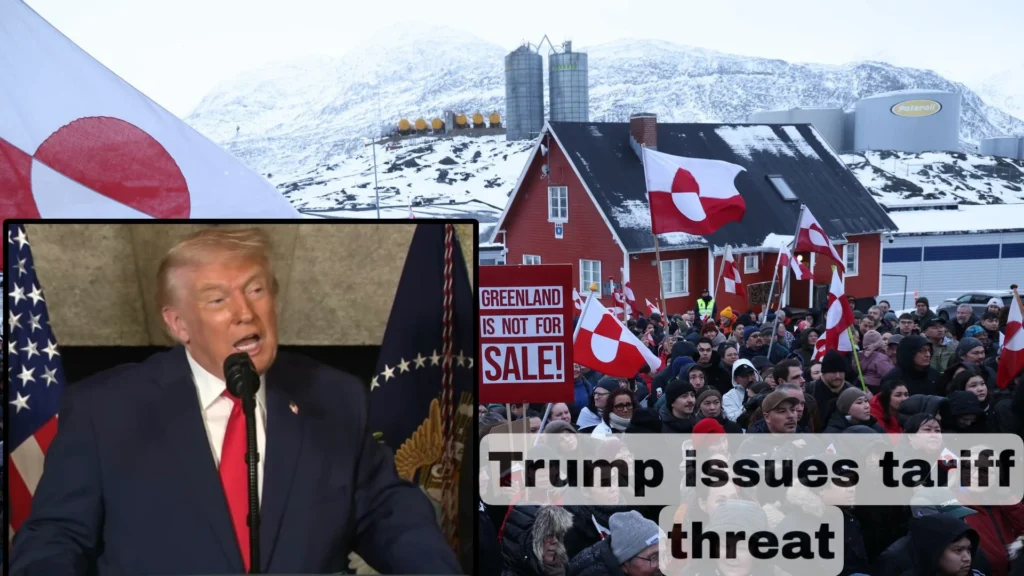
the latest on Trump’s bold announcement to impose tariffs on Denmark and seven European allies unless a deal is reached to buy Greenland. Explore the reasons, international reactions, and implications for global security and trade in this developing story.
to Trump’s Latest Greenland Tariff Threat
President Donald Trump has once again thrust the issue of Greenland into the global spotlight with a dramatic announcement. On January 17, 2026, Trump declared via Truth Social that the United States would impose a 10% tariff on goods from Denmark and seven other European countries—Norway, Sweden, France, Germany, the United Kingdom, the Netherlands, and Finland—starting February 1, 2026. These tariffs would escalate to 25% on June 1, 2026, and remain in place “until such time as a Deal is reached for the Complete and Total purchase of Greenland.”
This move revives Trump’s long-standing interest in acquiring the world’s largest island, a semi-autonomous territory under Danish sovereignty. Trump argues that controlling Greenland is essential for U.S. national security, particularly in countering potential ambitions from China and Russia in the Arctic region. The announcement has sparked widespread condemnation from European leaders, protests in Denmark and Greenland, and concerns about straining NATO alliances.
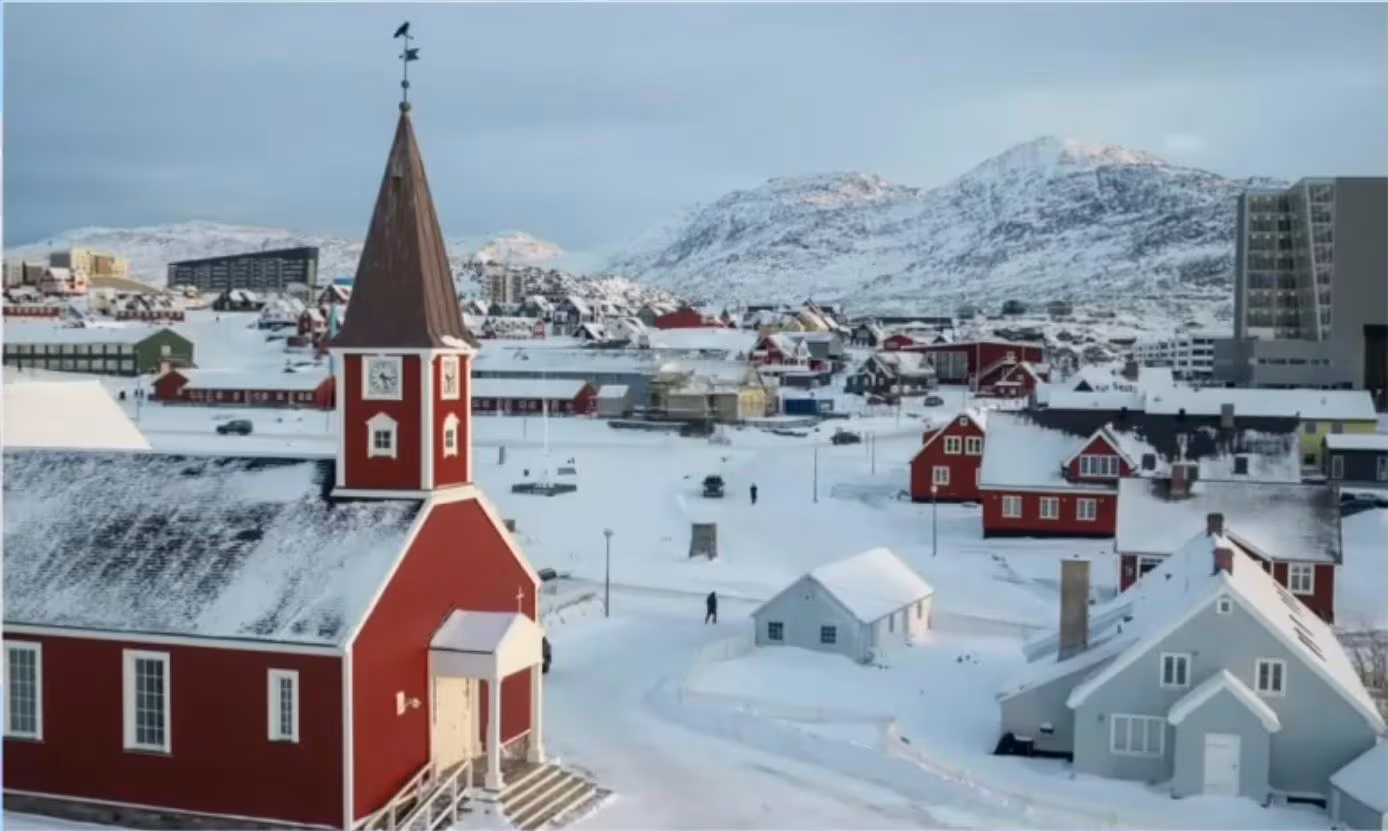
U.S. President Donald Trump has
In a dramatic escalation of international trade and diplomatic tensions, U.S. President Donald Trump has announced that the United States will impose new tariffs on Denmark and seven other European countries — and keep them in place until there’s a deal to buy Greenland. The announcement, made via Trump’s social media platform Truth Social on January 17, 2026, ties trade policy directly to territorial negotiation, a move that has stunned allies, rattled markets, and ignited protests in Europe and Greenland itself
Background on Trump’s Interest in Buying Greenland
Trump’s fascination with Greenland dates back to his first term, when he publicly floated the idea of purchasing the territory from Denmark. At the time, the proposal was met with ridicule and firm rejection from Danish officials, who famously stated that Greenland was “not for sale.” Despite the backlash, Trump has persisted, viewing the island as strategically vital.
Greenland’s strategic importance stems from its location in the Arctic, where melting ice is opening new shipping routes and exposing vast mineral resources, including rare earth elements critical for technology and defense. The U.S. already maintains a significant military presence through Thule Air Base under a 1951 defense agreement with Denmark, allowing expansion of facilities. However, Trump has insisted that full ownership is necessary for enhanced security, including integration into advanced missile defense systems like the proposed “Golden Dome.”
Recent developments include discussions within the Trump administration about potential purchase models, with estimates suggesting a cost ranging from $500 billion to $700 billion. Some reports indicate considerations of direct payments to Greenland’s residents or a compact of free association, similar to U.S. arrangements with Pacific islands. Greenland’s population of around 57,000, mostly Inuit, has expressed strong opposition to any sale, emphasizing self-determination.
- to Trump’s Latest Greenland Tariff Threat
- Background on Trump’s Interest in Buying Greenland
- Details of the New Tariffs Announcement on Denmark and European Allies
- Why Trump Wants to Buy Greenland: Strategic and Security Reasons
- Reactions to Trump’s Tariffs and Greenland Purchase Push
- Potential Economic and Geopolitical Impacts of the Tariffs
- Future Outlook for a Greenland Deal and Tariff Resolution
Details of the New Tariffs Announcement on Denmark and European Allies
In his Truth Social post, Trump targeted eight NATO members: Denmark, Norway, Sweden, France, Germany, the United Kingdom, the Netherlands, and Finland. He accused these nations of creating a “very dangerous situation” by deploying troops to Greenland for military exercises, which he claimed undermined global peace.
The tariffs are set to begin at 10% on all goods exported to the U.S. from these countries on February 1, 2026, rising to 25% by June 1 if no agreement on Greenland is reached. Trump framed this as a response to decades of U.S. “subsidizing” Europe through low or no tariffs, demanding that Denmark “give back” by selling Greenland.
This approach aligns with Trump’s broader use of tariffs as a negotiating tool, seen in past dealings with countries like Colombia on migration issues. However, these new levies could conflict with existing U.S.-EU trade frameworks and a recent U.S.-UK agreement capping certain tariffs.
Why Trump Wants to Buy Greenland: Strategic and Security Reasons
Trump’s primary justification centers on national security. He has repeatedly warned that China and Russia seek influence in Greenland, and Denmark’s defenses—mocked as inadequate (“two dogsleds”)—cannot counter such threats. Acquiring Greenland would secure Arctic dominance, protect vital sea lanes, and bolster U.S. military capabilities amid rising geopolitical competition.
Supporters, including some Republican figures like Sen. Tom Cotton, argue that Greenland is crucial for U.S. interests in the Arctic, where climate change is reshaping global dynamics. The island’s resources and position make it a key asset in great-power competition.
Critics, however, point out that the U.S. already has robust access rights and that forcing a sale could damage alliances more than enhance security.
Reactions to Trump’s Tariffs and Greenland Purchase Push
European leaders have united in opposition. European Commission President Ursula von der Leyen and European Council President António Costa expressed “full solidarity” with Denmark and Greenland, warning that tariffs would “undermine transatlantic relations and risk a dangerous downward spiral.”
UK Prime Minister Keir Starmer called the plan “completely wrong,” while French President Emmanuel Macron rejected intimidation. Swedish and Norwegian leaders emphasized that only Denmark and Greenland decide such matters. Denmark’s Foreign Minister Lars Løkke Rasmussen described the threat as a “surprise” after recent constructive talks.
Protests erupted in Nuuk (Greenland’s capital) and Copenhagen, with demonstrators waving flags and rejecting U.S. acquisition. The EU scheduled an emergency ambassadors’ meeting to coordinate a response.
In the U.S., bipartisan congressional pushback has emerged, with some Republicans criticizing the tariffs as harmful to alliances.
Potential Economic and Geopolitical Impacts of the Tariffs
The proposed tariffs could disrupt transatlantic trade, affecting industries from automotive to pharmaceuticals. The EU is America’s largest trading partner, and escalating duties risk higher consumer prices and retaliatory measures.
Geopolitically, the move strains NATO at a time of global tensions, potentially benefiting adversaries like Russia and China by sowing division among allies. Analysts warn that pressuring allies over Greenland diverts focus from other priorities, like Ukraine.
For Greenland, the controversy highlights desires for greater autonomy, with locals prioritizing self-determination over external control.
Future Outlook for a Greenland Deal and Tariff Resolution
Trump has indicated openness to negotiation, but Denmark and Greenland remain firm: the island is not for sale. Without compromise, tariffs could proceed, leading to trade friction and diplomatic fallout.
As the February 1 deadline approaches, the world watches whether this escalates into a major crisis or resolves through dialogue. Trump’s tariff strategy on Denmark and allies underscores his unconventional approach to foreign policy, blending economic leverage with territorial ambitions.
Australia Student Visa 2026
| Daily Update | click here |
| World | click here |
Author Profile

- Global Daily Post – Your Trusted Source for Global News & Updates
Globle Daily Post is a leading news platform that covers cricket news, automotive launches, gold silver rates, and international news in real-time.
Latest entries
 IndiaMarch 18, 2026Renault India 2026 Launch Expected Features Price Mileage & Full Details
- WorldMarch 12, 2026Is The Gulf Questioning US Security Guarantee? Rising Doubts Over America’s Role in Middle East Security
- IndiaMarch 7, 2026India vs New Zealand Final Press Conference Live Updates: How SKY Reacted to Santner’s Big Comment Before T20 World Cup Final
- IndiaMarch 7, 2026Future Will Be Much More Multipolar, Says S Jaishankar: India’s Vision for a Changing Global Order






Pingback: AFCAT 1 Admit Card 2026 to Be Released Soon: Download Link
Pingback: Gold Price in India Today: 22K & 24K Rates Stay Firm, Check