
Iran faces a nationwide internet blackout amid large anti-government protests sparked by economic crisis. Discover the causes, impacts, and latest updates on the ongoing unrest and internet blackout in Iran.
Understanding the Internet Blackout in Iran Amid Widespread Protests
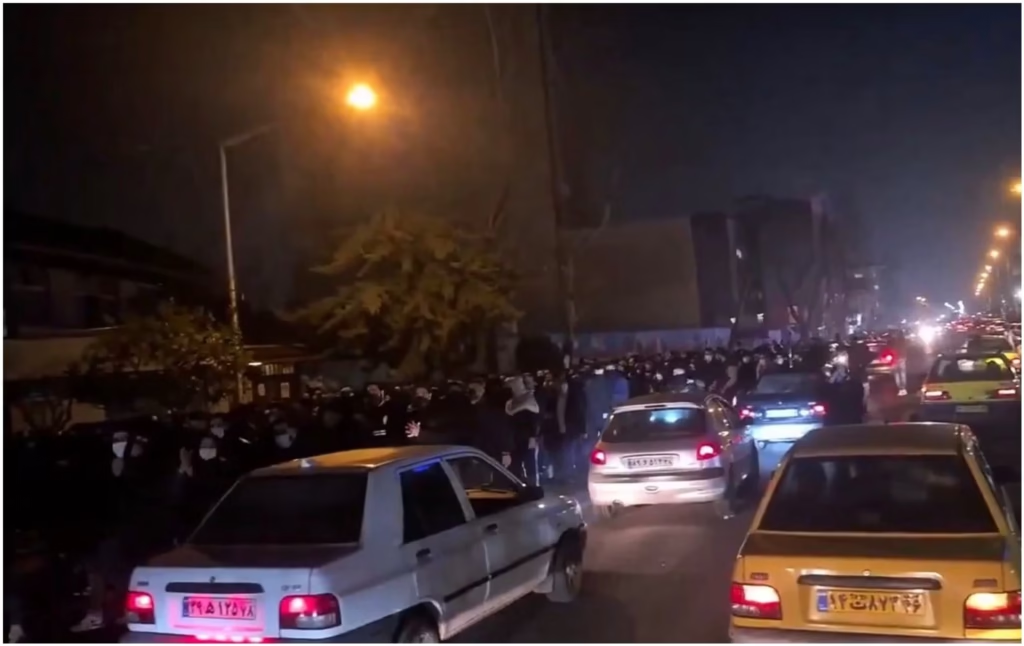
As of January 8, 2026, Iran has plunged into a near-total internet blackout while large anti-government protests continue to sweep across the country. Monitoring groups like NetBlocks and Cloudflare Radar have confirmed a nationwide shutdown of internet connectivity, severely restricting communication during a critical period of unrest. This internet blackout in Iran is seen as a deliberate measure by authorities to hinder protest organization and limit the flow of information to the outside world.
The protests, which began in late December 2025, have escalated rapidly, marking one of the most significant challenges to the Islamic Republic since the 2022-2023 Mahsa Amini demonstrations. What started as economic grievances has evolved into broader calls for political change, with demonstrators chanting slogans against the regime.
Roots of the Large Anti-Government Protests in Iran
The current wave of large anti-government protests originated in Tehran’s Grand Bazaar on December 28, 2025, when merchants and shopkeepers shut down their businesses in response to the dramatic depreciation of the Iranian rial. Inflation rates soared to over 42% in December 2025, with food prices rising by 72% year-on-year. Essential goods became unaffordable for many, exacerbating longstanding economic hardships fueled by international sanctions, mismanagement, and the aftermath of regional conflicts.
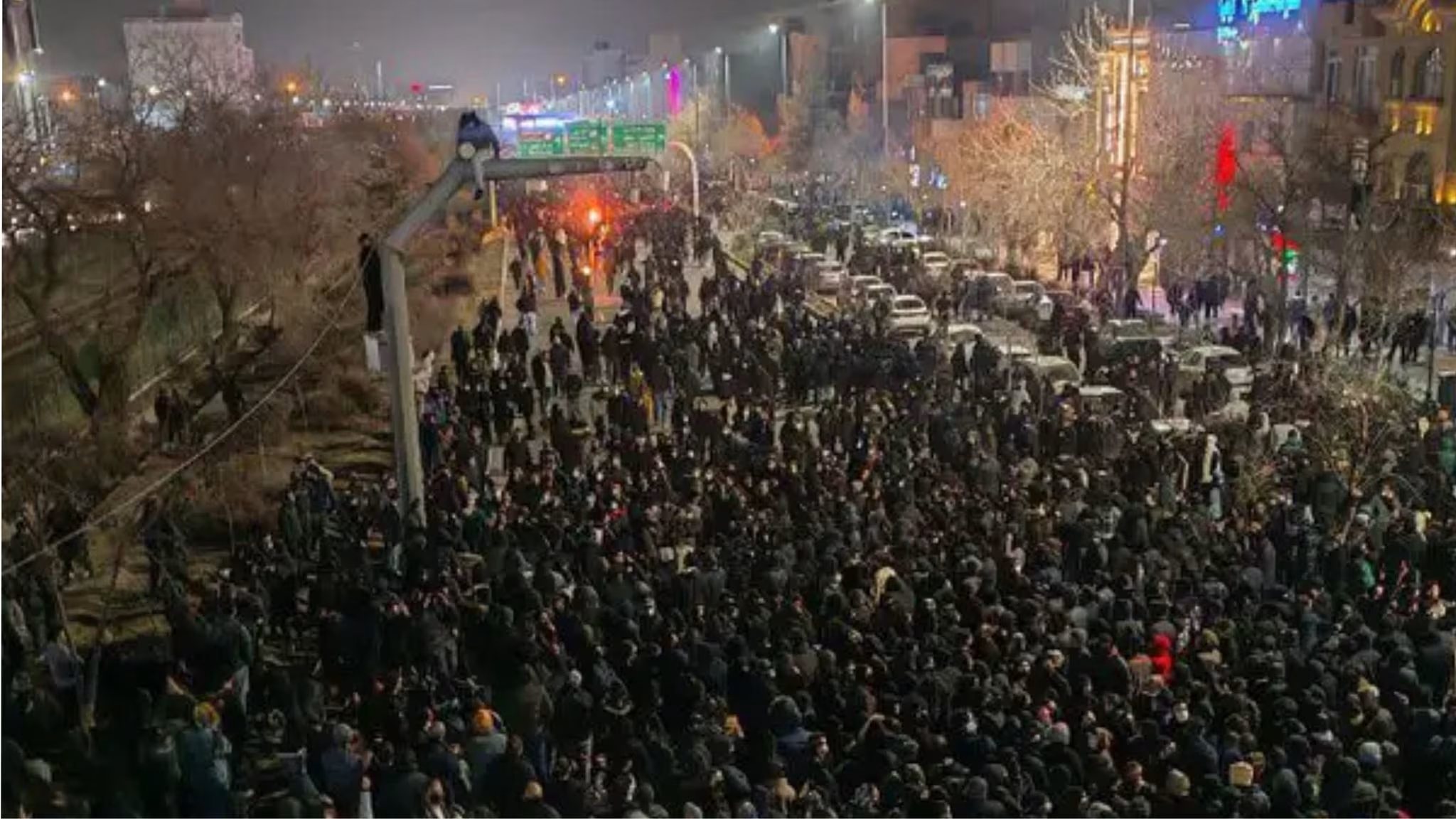
Protesters initially focused on economic issues, chanting phrases like “Neither Gaza nor Lebanon, my life for Iran,” criticizing the government’s foreign policy priorities. However, the movement quickly broadened, with calls for freedom and direct opposition to Supreme Leader Ayatollah Ali Khamenei. By early January 2026, protests had spread to all 31 provinces, involving diverse groups including merchants, students, pensioners, and young people.
Economic Crisis Fueling the Unrest
Iran’s economy has been in freefall, compounded by U.S.-led sanctions reimposed in recent years and the impacts of the brief but intense 2025 conflict with Israel. The rial’s value plummeted, leading to soaring costs for basics like rice, meat, and medicine. Government attempts to appease demonstrators, such as subsidizing essential goods and approving salary increases, have been widely viewed as insufficient.
In cities like Tehran, Isfahan, Mashhad, and Shiraz, bazaars remained shuttered for days, symbolizing widespread strikes. Security forces responded with tear gas, arrests, and in some cases, live ammunition, resulting in dozens of deaths and thousands of detentions.
The Role of Internet Blackout in Suppressing Protests
Authorities imposed the internet blackout in Iran on January 8, 2026, coinciding with a call for mass demonstrations by exiled Crown Prince Reza Pahlavi. Connectivity dropped sharply, with mobile data hit hardest and IPv6 networks disconnected from global access. This tactic mirrors past responses, such as during the 2019 fuel protests and the 2022 Mahsa Amini uprising, where near-total shutdowns lasted days or weeks.
Why Authorities Resort to Internet Blackouts
The internet blackout in Iran serves multiple purposes: preventing real-time coordination via social media platforms like Instagram and WhatsApp (already restricted but accessible via VPNs), blocking the upload of protest videos to international audiences, and creating an information vacuum. Experts note that while Iran’s National Information Network allows limited domestic services like banking to function, global access is severed.
In previous instances, blackouts blinded protesters’ communication while also limiting the regime’s own cyber monitoring. However, with growing satellite options like Starlink and economic dependence on digital services (over 10 million livelihoods tied to online activities), full shutdowns carry risks, including further alienating the population and harming businesses.
Impact of the Internet Blackout on Protesters and Daily Life
The nationwide internet blackout in Iran has isolated citizens, making it difficult to share evidence of crackdowns or organize safely. Rights groups report hospital raids to detain injured protesters and the use of force in multiple cities. Despite restrictions, videos and reports have trickled out via proxies, showing crowds chanting for regime change and tearing down symbols of authority.
For ordinary Iranians, the blackout disrupts everything from e-commerce to ride-hailing apps reliant on global connectivity. It also hampers access to news, exacerbating feelings of isolation during a time of national crisis.
Regional Variations in Restrictions
Earlier disruptions were targeted, with western provinces like Kermanshah and Lorestan experiencing severe throttling where protests were intense. By January 8, the blackout became nationwide, affecting even fixed-line connections minimally used for essential services.
- Understanding the Internet Blackout in Iran Amid Widespread Protests
- Roots of the Large Anti-Government Protests in Iran
- The Role of Internet Blackout in Suppressing Protests
- Impact of the Internet Blackout on Protesters and Daily Life
- International Reactions to Protests and Internet Blackout
- Historical Context: Iran’s Pattern of Internet Controls During Unrest
- What Lies Ahead for Iran Amid Protests and Blackout
International Reactions to Protests and Internet Blackout
The international community has expressed concern over the internet blackout in Iran and the violent suppression of protests. U.S. President Donald Trump warned of strong action if protesters are killed, echoing threats that reportedly complicated Iran’s response. Human rights organizations, including Amnesty International and Iran Human Rights, have documented casualties and called for accountability.
Exiled figures like Reza Pahlavi have rallied support, urging global backing for Iranians seeking change. Analysts suggest the protests could represent a tipping point, given the regime’s weakened position post-regional setbacks, including the fall of ally Bashar al-Assad in Syria.
Historical Context: Iran’s Pattern of Internet Controls During Unrest
Iran has a long history of using internet blackouts to manage dissent. Notable examples include:
- 2019 Protests: Near-total shutdown amid fuel price hikes.
- 2022-2023 Mahsa Amini Protests: Prolonged restrictions and bans on apps.
- 2025 Israel Conflict: Temporary blackout cited as a security measure.
These tactics highlight the regime’s reliance on controlling information flows, especially as social media has become a key tool for mobilization.
Challenges to Censorship
Despite efforts, some Iranians bypass restrictions using VPNs or emerging satellite technologies. However, the government has criminalized tools like Starlink and intensified VPN crackdowns.
What Lies Ahead for Iran Amid Protests and Blackout
As large anti-government protests persist despite the internet blackout in Iran, the regime faces mounting pressure. Calls for general strikes in Kurdish regions and ongoing nightly demonstrations suggest the movement’s resilience. Economic reforms promised by President Masoud Pezeshkian have failed to quell anger, and security forces’ heavy-handed approach risks further escalation.
The blackout may temporarily disrupt coordination, but it also fuels resentment, potentially prolonging unrest. Observers watch closely for signs of defections within security forces or broader international intervention.
In conclusion, the current internet blackout in Iran underscores the regime’s strategy to contain large anti-government protests amid a profound economic and political crisis. As demonstrators demand fundamental change, the world awaits whether this wave of unrest will lead to meaningful reforms or deeper repression.
Author Profile

- Global Daily Post – Your Trusted Source for Global News & Updates
Globle Daily Post is a leading news platform that covers cricket news, automotive launches, gold silver rates, and international news in real-time.
Latest entries
 IndiaMarch 18, 2026Renault India 2026 Launch Expected Features Price Mileage & Full Details
- WorldMarch 12, 2026Is The Gulf Questioning US Security Guarantee? Rising Doubts Over America’s Role in Middle East Security
- IndiaMarch 7, 2026India vs New Zealand Final Press Conference Live Updates: How SKY Reacted to Santner’s Big Comment Before T20 World Cup Final
- IndiaMarch 7, 2026Future Will Be Much More Multipolar, Says S Jaishankar: India’s Vision for a Changing Global Order