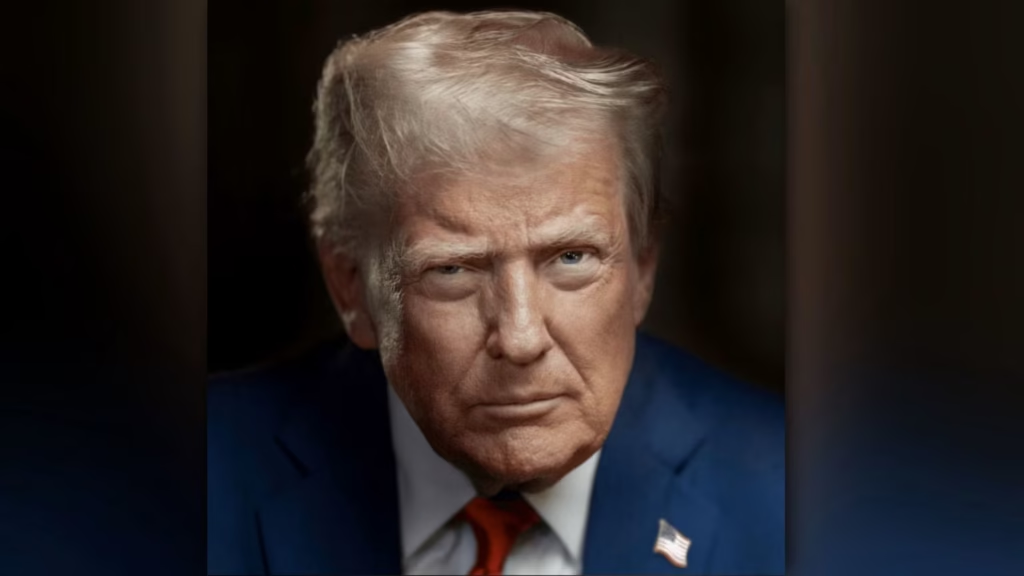
In this in-depth analysis inspired by Jonathan Freedland’s insights, discover how an American president ruling like a global emperor poses the same threat from Caracas to Minneapolis. Explore Trump’s Venezuela strikes, Minneapolis ICE shooting, and the erosion of democracy in 2026 – a must-read on US imperialism and unchecked power.
Unpacking the Global Emperor Mindset
The phrase “from Caracas to Minneapolis, the threat is the same – an American president ruling like a global emperor” captures a chilling reality in today’s political landscape. Coined by Guardian columnist Jonathan Freedland, this statement highlights how presidential actions abroad and at home blur into a singular pattern of unchecked authority. In 2026, as Donald Trump navigates his presidency with bold interventions, we’re witnessing a leader who operates beyond traditional boundaries, treating global and domestic affairs as extensions of personal will. This article delves into the implications of such a “global emperor” approach, examining recent events in Venezuela and the United States while drawing on Freedland’s critique to argue for greater accountability.
At its core, the threat stems from a disregard for international norms and domestic restraints. Freedland’s commentary points to Trump’s candid admissions, where he views his “own morality” as the sole limiter on power. This isn’t just rhetoric; it’s reflected in military strikes overseas and aggressive law enforcement at home. As we explore this topic, we’ll see how these actions fuel fear, erode trust, and challenge the foundations of democracy. Keywords like “American president global emperor” and “threat from Caracas to Minneapolis” underscore the interconnected dangers, making this a timely discussion for anyone concerned about global stability.
The Venezuela Crisis: Military Might and Resource Control
Strikes on Caracas: A Display of Imperial Ambition
The recent U.S. military operation in Venezuela, which culminated in the capture of Nicolás Maduro, exemplifies the “American president ruling like a global emperor” paradigm. Launched under the pretext of combating drug trafficking, the strikes on Caracas revealed a deeper motive: control over Venezuela’s vast oil reserves. Trump openly declared that the U.S. would “run” the country, shifting seamlessly to discussions of oil extraction. This transparency, as Freedland notes, strips away any veneer of humanitarian intent, exposing a raw pursuit of resources that echoes historical U.S. interventions in Latin America.
Historically, America’s involvement in the region has often been framed around security or democracy promotion. From the Monroe Doctrine to more recent actions in Iraq, the pattern of using military force to secure economic interests persists. In 2026, however, Trump’s approach feels more brazen. By bypassing international bodies like the United Nations and ignoring calls from allies, he positions himself as an unchallenged authority. The threat from Caracas isn’t just to Venezuelan sovereignty; it’s a signal to neighboring nations like Colombia and Mexico that defiance could invite similar “rain of fire.” Freedland’s analysis warns that this fear-based strategy – removing a leader to intimidate successors – could reshape hemispheric relations without the need for prolonged occupations.
Broader Implications for Latin America
Extending the “global emperor” lens, Trump’s threats extend beyond Venezuela. His warnings to Mexico about airstrikes on drug cartels and dismissive stance toward Cuba suggest a continental strategy rooted in intimidation. Even Greenland, once a punchline in Trump’s foreign policy musings, now looms as a potential target for annexation. This expansionist vibe, Freedland argues, leverages U.S. military superiority to enforce compliance, sidelining diplomacy. For Latin American countries, the threat from Caracas to Minneapolis manifests as economic dependency and political instability, where local leaders must “watch their ass” or face repercussions.
Critics, including European leaders, have condemned these moves as violations of international law. Yet, Trump’s administration counters with claims of self-defense against narcotics flows – a narrative debunked by experts who point out that Venezuelan drugs play a minor role in U.S. opioid crises. Instead, pardons for figures like the former Honduran president convicted of massive cocaine trafficking highlight hypocrisy. As we grapple with this, the keyword “American president global emperor” reminds us that such actions aren’t isolated; they’re part of a worldview where power trumps ethics.
Domestic Front: From Minneapolis to Nationwide Intimidation
The Minneapolis Shooting: A Symbol of Homegrown Repression
Shifting focus inward, the threat materializes starkly in events like the Minneapolis ICE shooting. Renee Nicole Good, a 37-year-old mother of three, was fatally shot by a federal agent during what witnesses described as a chaotic operation. Video footage shows her attempting to flee, not attack, yet Trump labeled her a “domestic terrorist” and defended the agents involved. This incident, occurring amid broader ICE raids, illustrates how the “American president ruling like a global emperor” extends to U.S. soil, treating citizens as subjects to be controlled through fear.
Freedland draws parallels between Caracas strikes and Minneapolis violence, noting both rely on misinformation and brute force. In Minneapolis, masked agents in unmarked vehicles have been accused of arbitrary detentions, evoking images of authoritarian regimes. Reports from Portland, Oregon, detail similar escalations, with border patrol agents firing outside hospitals. These tactics aren’t about immigration enforcement; they’re about instilling dread in “Democrat-run” cities, as Trump has phrased it. The threat from Caracas to Minneapolis lies in this uniformity: whether bombing abroad or shooting at home, the goal is submission.
ICE Operations and the Erosion of Civil Liberties
Broader ICE activities amplify this domestic threat. For months, agents have conducted sweeps, often without clear warrants, targeting immigrants and protesters alike. In Los Angeles and Washington D.C., National Guard deployments further blur lines between military and civilian policing. Freedland’s piece highlights how lies fuel this fear – from mischaracterizing Good’s actions to exaggerating threats. Such propaganda, echoed by allies like JD Vance, who called her “deranged,” undermines public trust and justifies overreach.
This pattern raises alarms about civil liberties. Human rights observers have been shot, streets blocked randomly, and communities terrorized, prompting comparisons to “government militias roaming unchecked.” For marginalized groups, especially immigrants and people of color, the “global emperor” threat feels personal. It erodes the rule of law, replacing it with executive whim. As Freedland urges, recognizing this as a unified strategy – fear as a tool for control – is crucial for resistance.
Trump’s Self-Perception: Unconstrained Power in Action
“My Own Morality”: A Chilling Admission
At the heart of Freedland’s critique is Trump’s New York Times interview, where he confessed that only “my own morality” and “my own mind” constrain him. This admission cements his view as a “global emperor,” unbound by courts, Congress, or international treaties. Freedland calls it a “horrifying moment of truth,” contrasting Trump’s lies (over 30,000 documented in his first term) with these rare honesties.
This mindset explains contradictions, like vowing “peace on Earth” days before Venezuelan strikes. It also justifies defending lethal force in Minneapolis while pursuing oil abroad. Judges and laws apply “under certain circumstances,” per Trump, reducing institutions to optional hurdles. In 2026, this philosophy manifests in pardons, military directives, and institutional intimidation, from media attacks to university pressures.
Historical Context and Future Risks
Drawing from history, U.S. presidents have wielded immense power, but Trump’s approach recalls imperial figures like Roman emperors, prioritizing personal loyalty over democratic norms. Freedland warns that without checks, this could lead to a “rogue state” scenario. For the world, it means unpredictable interventions; for Americans, escalating domestic authoritarianism. Keywords like “threat from Caracas to Minneapolis” encapsulate this dual peril, urging vigilance.
Global and Domestic Implications: Erosion of Norms
Challenging International Law
Trump’s actions flout international law, from unilateral Venezuela strikes to Greenland ambitions. Freedland notes Europe’s fear, especially after Trump’s treatment of Ukraine’s Zelenskyy, where allies hesitate to challenge him lest they lose U.S. support. This leverage – tying aid to compliance – redefines alliances as subservience, threatening global order.
Undermining U.S. Democracy
At home, the “American president global emperor” threat weakens democracy through fear and division. By targeting blue states and cities, Trump consolidates power, potentially influencing November’s elections. Freedland advocates wresting congressional control from Republicans as a countermeasure, emphasizing collective action.
Overcoming the Threat: Strategies for Resistance
International Coalition Building
To counter this, Freedland suggests major powers unite, using economic leverage against U.S. unilateralism. Europe, for instance, could rally on issues like Venezuela, pushing for multilateral solutions.
Domestic Mobilization and Voting
In the U.S., overcoming fear means voting and civic engagement. Midterm elections offer a chance to curb executive overreach. Grassroots movements, inspired by past resistances, can amplify voices against repression.
Conclusion: A Call for Honest Confrontation
From Caracas to Minneapolis, the threat of an American president ruling like a global emperor is real and multifaceted. Jonathan Freedland’s insights illuminate how Trump’s actions – driven by a self-perceived moral monopoly – endanger global peace and domestic freedoms. By addressing this head-on, through awareness, unity, and action, we can safeguard democracy. In 2026, the stakes couldn’t be higher; it’s time to reject imperial rule and reclaim accountable leadership.
Author Profile

- Global Daily Post – Your Trusted Source for Global News & Updates
Globle Daily Post is a leading news platform that covers cricket news, automotive launches, gold silver rates, and international news in real-time.
Latest entries
 IndiaMarch 18, 2026Renault India 2026 Launch Expected Features Price Mileage & Full Details
- WorldMarch 12, 2026Is The Gulf Questioning US Security Guarantee? Rising Doubts Over America’s Role in Middle East Security
- IndiaMarch 7, 2026India vs New Zealand Final Press Conference Live Updates: How SKY Reacted to Santner’s Big Comment Before T20 World Cup Final
- IndiaMarch 7, 2026Future Will Be Much More Multipolar, Says S Jaishankar: India’s Vision for a Changing Global Order